Greetings, and thanks for your interest in Django in June’s 2026 concerts!
As always, the groups featured in our performances are made up of artists who have been teaching and jamming with us all week up on the Smith campus. We’ll do our best to describe this year’s program below, but it is safe to say that whether we mention them here or not, other artists in town for “Django Camp” will be making appearances. Django in June is delightfully unpredictable that way. Please join us!
Both shows start at 7:30
Tickets priced from $25 – $45.
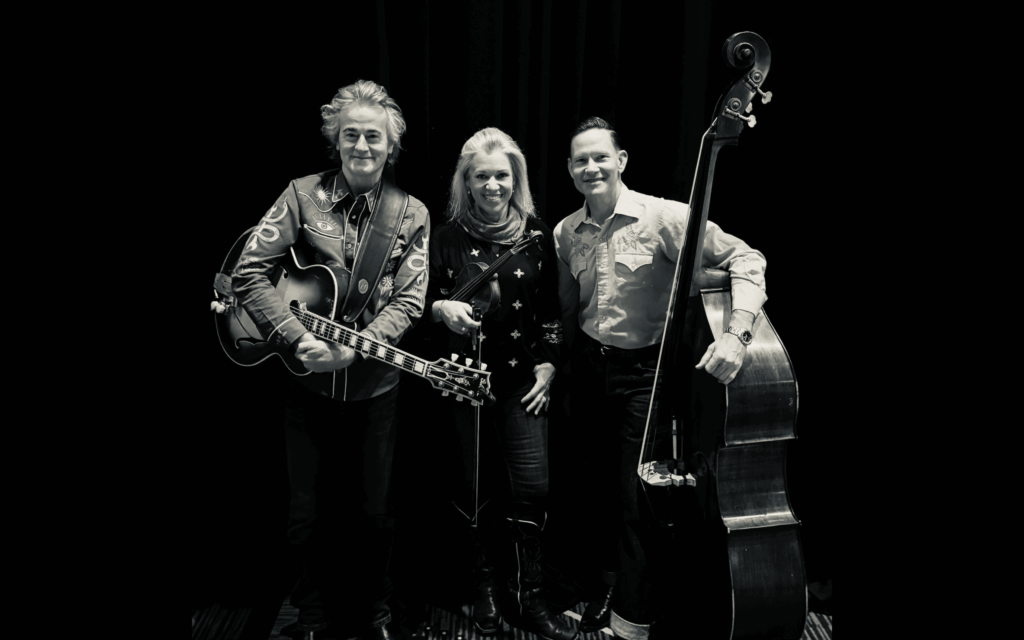
In 1994 in New York City, Elana James placed an ad in the music section of the Village Voice looking to join a band, and Whit Smith answered it. Since then the music these two have made has always been a secret brew of energy, joie de vivre, and a respect for tradition. By 1997, after founding a Western swing orchestra in NYC, Elana and Whit pared back down to their essential elements and the duo that began as “Whit & Elana” grew — with the addition of a bass player and a lot of optimism and naïveté — into Hot Club of Cowtown.
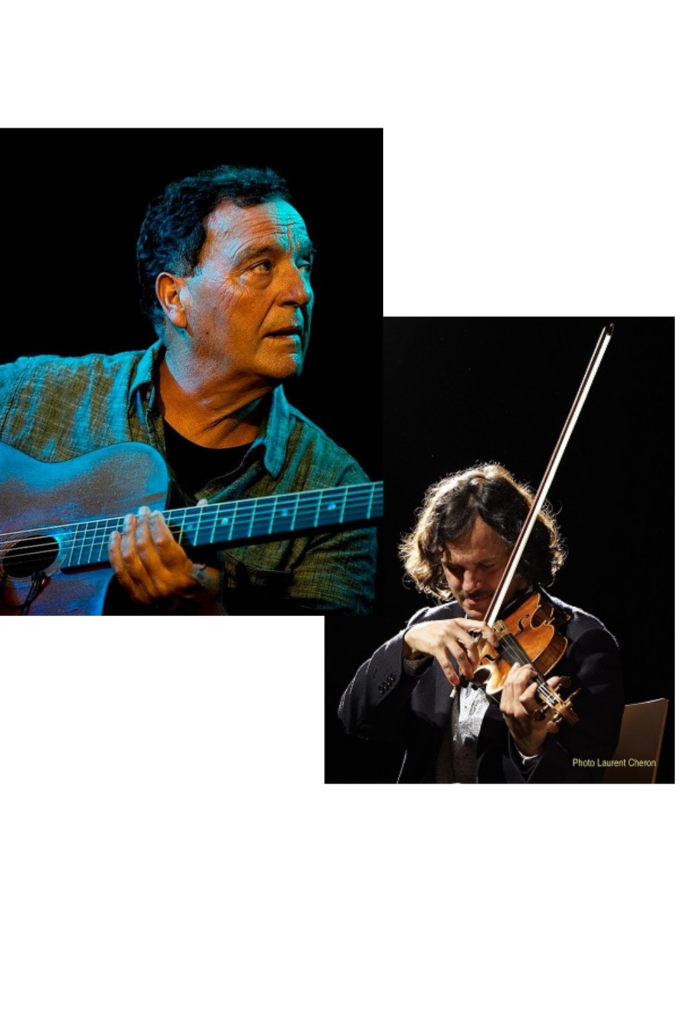
A self-taught musician who trained under the direct guidance of masters, Gwen Cahue blends the raw energy of Jimi Hendrix with the melodic inventiveness of Django Reinhardt. It was in Strasbourg, through his interactions with the genre’s leading figures—Biréli Lagrène, Yorgui Loeffler—that he embraced the manouche (Gypsy) tradition before expanding it to encompass a broad musical palette.
Gwen first came to our attention through his involvement in Selmer 607 and Django Club early in the 2000’s. These were projects that involved, by invitation, the very best of a new generation of French guitarists who not only carried on the tradition of jazz manouche, but lifted it to new heights. Tonight, the Gwen Cahue Quartet will do the same for your spirits. The group is made up of best-in-class specialists in this style: Bastien Ribot on violin, William Brunard on double bass, and Benji Winterstein on rhythm guitar.
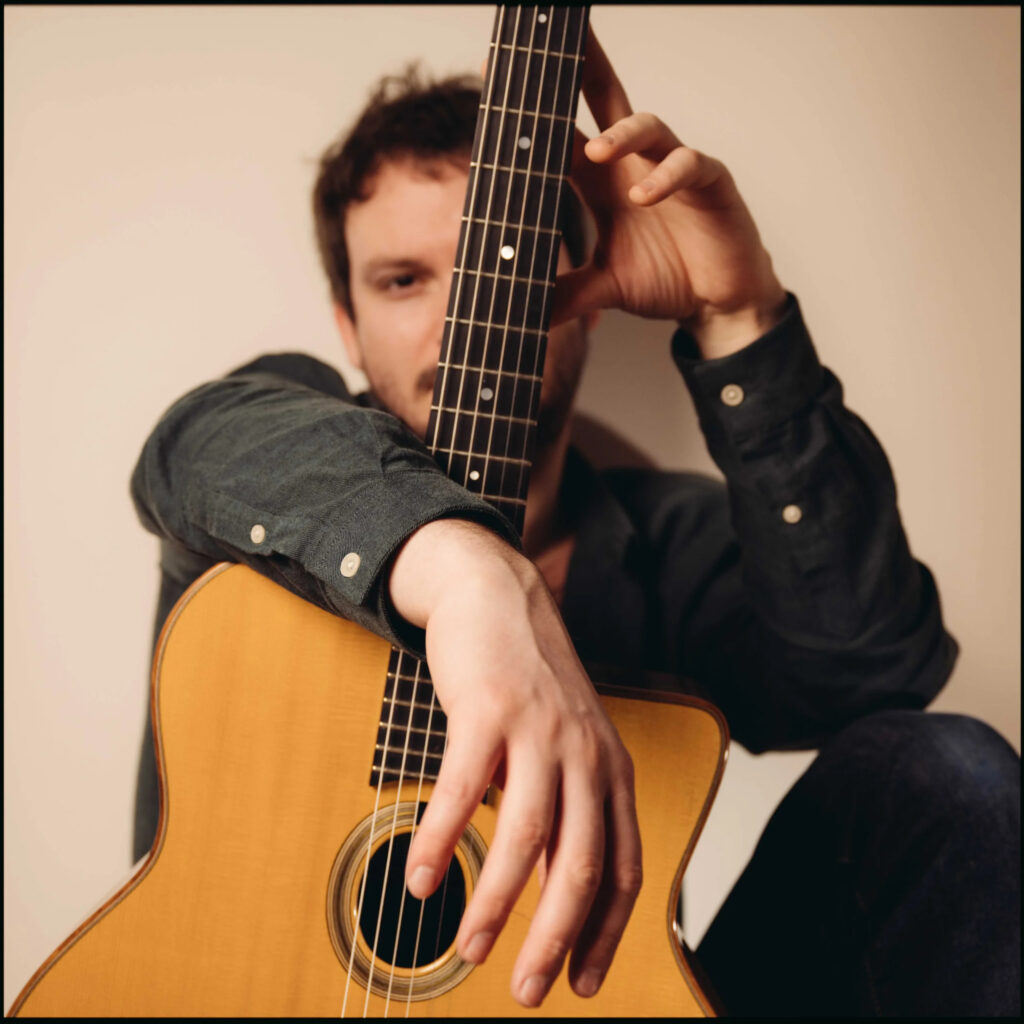
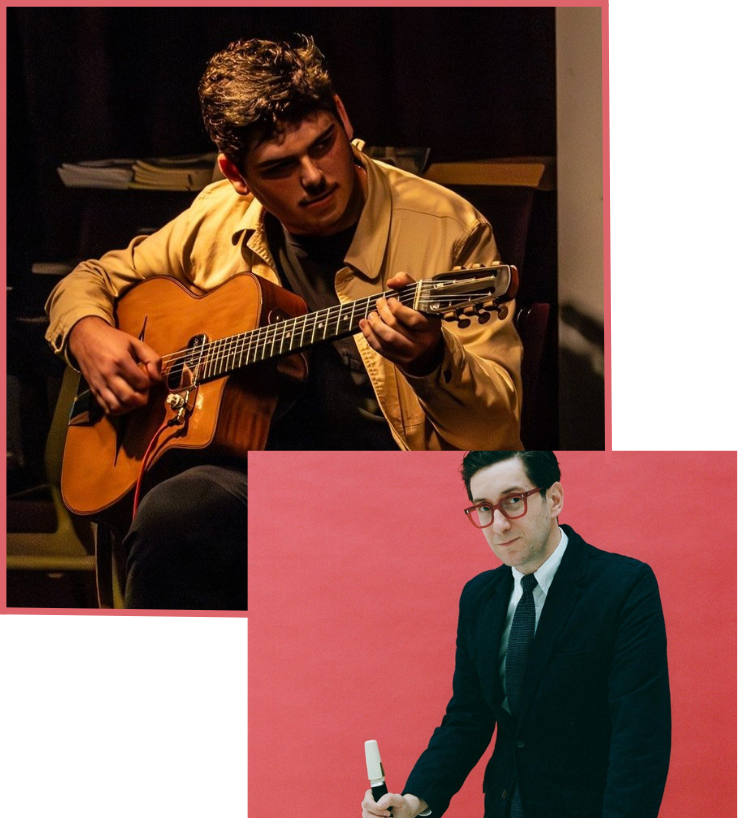
Django in June was launched over 20 years ago on the hunch that maybe some North American guitarists would be interested in learning how to play Gypsy Swing in what we might call the “European style”. Enter Baltimore born-and-based Sam Farthing to demonstrate that some of us are not only interested in studying the style—some are capable of mastering it. And in Sam’s case, at a remarkably young age.
He has done so by applying his raw talent to intensive study of the work of Django Reinhardt and his musical heirs, many of whom he has by now come to know and with whom he has shared the stage: Stochelo and Mozes Rosenberg, Tchavolo and Samson Schmitt, and Fapy Lafertin (also featured in tonight’s concert.) Sam put in an appearance last year here at Django in June on another artist’s bill. This year, though, the show is all his, ably supported by Sami Arefin on guitar and Zach Valentine on bass. Sam will be joined as well by a perennial favorite of DiJ students and audience alike, clarinetist Giacomo Smith.
Fapy Lafertin is one of the most celebrated and influential Gypsy guitarists of the last 50 years. Like most Sinti musicians, Fapy started his musical career playing in a family band—his father on violin and his brother on rhythm guitar. He started playing the Hot Club de France repertoire when he joined the orchestra of violinist Piotto Limberger (Tcha’s grandfather). Between 1975 and 1985 Fapy played in the highly influential band, Waso, which also featured Vivi Limberger, a revered Sinti musician in his own right. Vivi’s son, Tcha Limberger, is both familiar and treasured by Django in June audiences. Tcha brings spontanaiety, humor, and technical brilliance to whatever he plays, whether drawn from family tradition, Hungarian Magyar Nota or Tin Pan Alley. He shares the stage with his uncle Fapy tonight on violin and vocals.
Beginning in the 1990’s, Lafertin joined forces with Bamboula Ferret, composing and recording songs in the Romani language. Also during that period, he released two iconic albums—‘Swing Guitars’ and ‘Hungaria’—with the British quartet, Lejazz. Those historic recording sessions were shepherded by one Dave Kelbie, who joins Fapy tonight on rhythm guitar. To round out the quartet, we welcome back Hungarian double bassist, Vilmos Csikos, who initially connected with Tcha through their shared passion for Hungarian music. They have since combined forces in a number of Tcha’s projects, none more forceful than this quartet. Please note: this is not a touring group—more like an intimate gathering of extremely talented family and old friends. Lucky us, we’re invited.